
Foundation Repair in Dallas, TX
Dallas has more foundation types per square mile than anywhere else we work. Kessler Park, Winnetka Heights, and the M Streets hold craftsman and Tudor houses from the 1920s that were built on cedar posts and brick piers. Lakewood and East Dallas mix those pre-war homes with 1950s ranches. Then Lake Highlands, Preston Hollow, and the tract neighborhoods north of Northwest Highway added tens of thousands of early slab-on-grade houses in the 1960s and 1970s.
None of those builders had the benefit of modern soil reports. The Blackland Prairie clay that runs under the whole city, the same Houston Black series you see turned up in every construction site along Central Expressway, can shrink and swell by more than ten percent of its volume between drought and flood. A slab poured in 1968 on twelve inches of that clay was always going to move.
We drive in from Irving on I-30 or Loop 12, which puts Oak Cliff, West Dallas, and the Design District within twenty minutes and most of North Dallas within thirty.
Common Dallas foundation failures by neighborhood
In Oak Cliff and East Dallas the pattern is interior sag. The original interior piers under a 1925 bungalow were set shallow, and decades of moisture in a closed crawl space have rotted the sill plates and let the center of the house drop below the perimeter. Floors slope toward the middle of the room, and the tell is a hump or a dip under the hallway.
In Lake Highlands and along Forest Ln, the 1960s slabs settle at the corners first. Big pecans and live oaks planted when the subdivision was new now pull hundreds of gallons a day out of the clay in summer, so the corner nearest the tree drops. You see it as a diagonal crack in the brick at the corner and a gap opening between the fascia and the top of the wall.
White Rock Lake and the Trinity floodplain neighborhoods have the opposite issue. The clay there rarely dries all the way, so slabs heave upward in the middle after a wet season. Heave needs a different fix than settlement, and confusing the two is the most expensive mistake a homeowner can make.
How we approach a Dallas job
For pier and beam homes we open the crawl space and map every pier, beam, and joist. Most of the time we replace the failed piers with new concrete pads and blocks, sister or replace rotted beams, and re-level the floor by adjusting shims. If the crawl space is the reason things rotted, we deal with the water too.
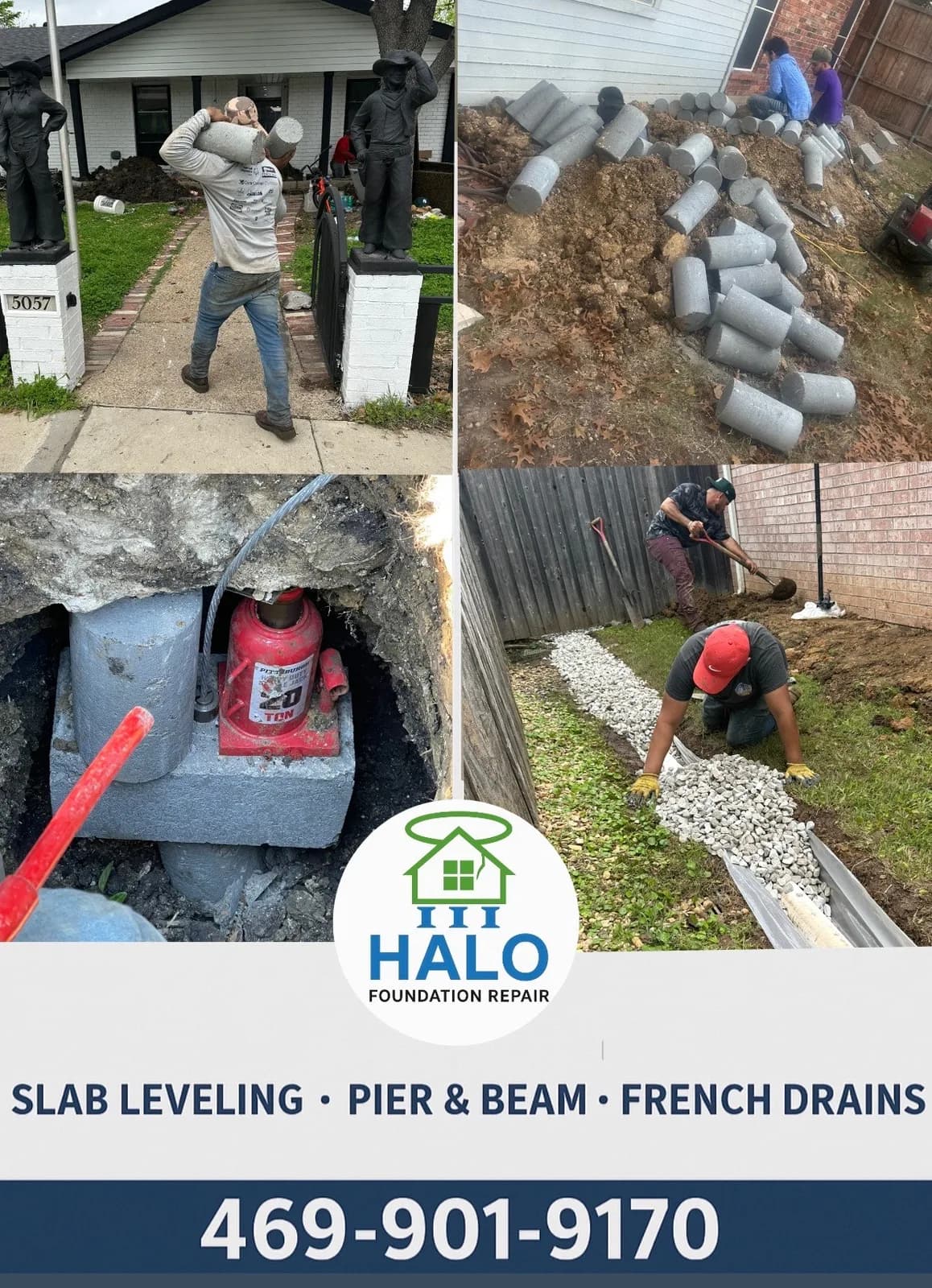
For slabs we install pressed concrete piers along the dropped side and lift the house back in stages, checking the elevation after every lift so we never over-correct and crack the slab. Where the problem is heave rather than settlement we look at drainage, plumbing leaks under the slab, and root barriers before we recommend any piers at all.
Every job starts with a free inspection and a written, itemized estimate. Dallas has plenty of foundation companies that quote thirty piers on a house that needs eight. We would rather do the eight and have you call us again in ten years for something else.
Drainage in the city
Older Dallas lots were graded for a smaller house and a lot less concrete. Add a driveway extension, a patio, and a neighbor whose yard is a foot higher, and the water has nowhere to go but against your slab. A French drain along the uphill side, tied into the gutters, usually costs less than a single row of piers and prevents the next round of movement.
Dallas homeowners ask
Free foundation estimate in Dallas
From Oak Cliff to Lake Highlands, we come out, measure the house, and give you an honest number. Call for a free estimate.